
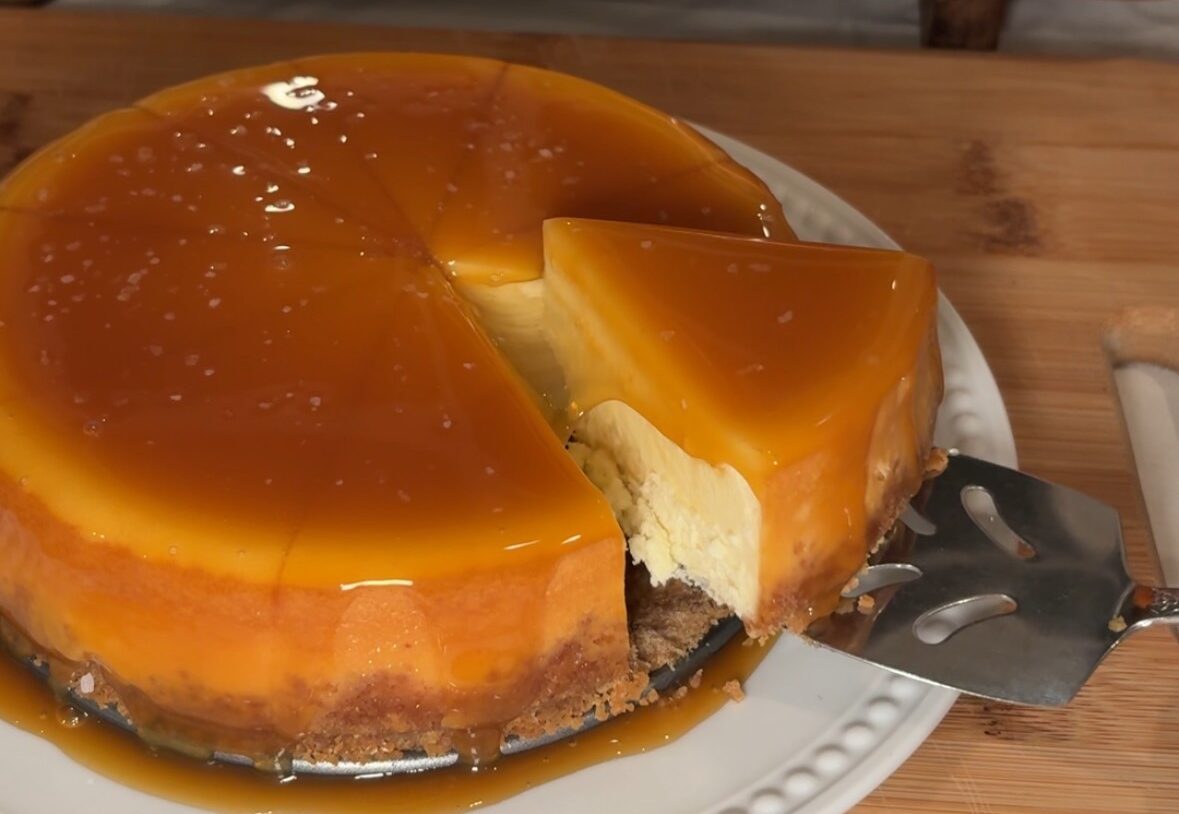
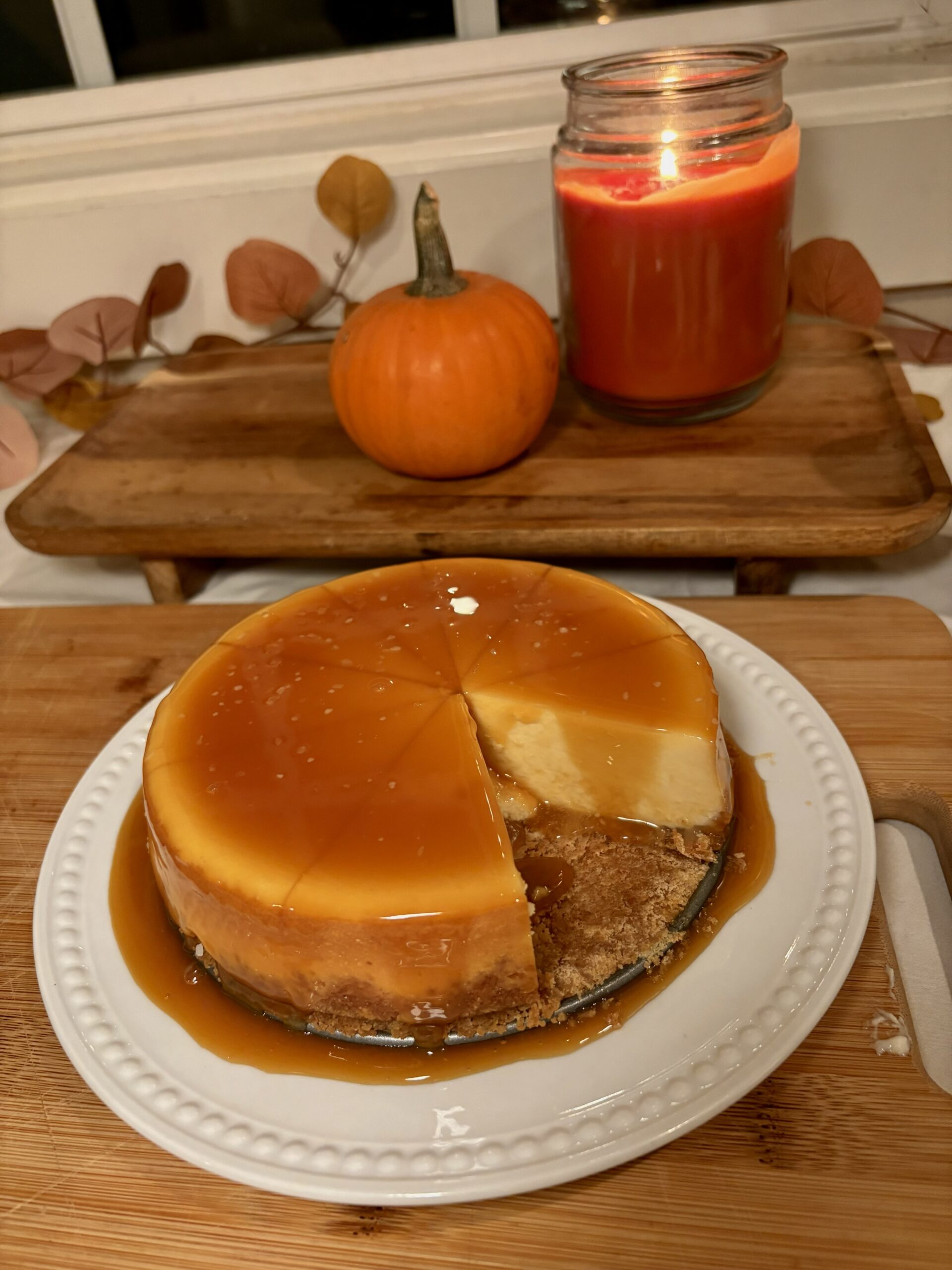
Classic Cheesecake with Caramel and Flaky Sea Salt
Rich, creamy, and perfectly smooth — this classic cheesecake is topped with homemade caramel sauce and a sprinkle of flaky sea salt for that irresistible sweet-and-salty finish.
Ingredients
Method
Make the Crust
- Preheat oven to 350°F (175°C).
- In a medium bowl, combine graham cracker crumbs, melted butter, and sugar. Stir until the texture resembles wet sand.
- Press the mixture firmly into the bottom and slightly up the sides of a 9-inch springform pan (lightly grease if not non-stick).
- Bake for 10 minutes, then remove from the oven and let cool while preparing the filling.
Make the Filling
- In a large mixing bowl (or stand mixer with the whip attachment), beat the cream cheese on medium-low speed until smooth and creamy — about 1 minute.
- Add sugar, salt, vanilla, and lemon juice. Beat until fully combined, scraping down the sides as needed.
- With the mixer on medium-low, add eggs one at a time, mixing well after each addition.
- Mix in the sour cream until just combined. Pour the batter over the cooled crust.
Bake the Cheesecake
- Bake at 350°F for 15 minutes.
- Reduce oven temperature to 300°F and bake for an additional 30–35 minutes, until the edges are slightly puffed and the center still jiggles when gently shaken.
- Turn off the oven and let the cheesecake rest inside (door closed) for 1 hour.
- Remove from oven and cool at room temperature for 1 hour, then refrigerate for at least 6 hours or up to 3 days before serving. (Loosely cover once fully chilled if storing longer.)
Finish and Serve
- Just before serving, drizzle generously with caramel sauce and sprinkle with flaky sea salt. Slice, serve, and enjoy that perfect balance of creamy, sweet, and salty!
Notes
Equipment:
Electric Mixer – https://amzn.to/4nIcCcQ
9inch Springform Pan – https://amzn.to/47JpfyB
Round Baking Sheet – https://amzn.to/481PD86
Mixing Bowl – https://amzn.to/4nCMU9D
Spatula – https://amzn.to/3XhsdW1
Measuring Cups & Spoons – https://amzn.to/3Lr0rE2
Tips:
How to Prevent Cracking
It’s important not to shock the cheesecake with sudden temperature changes. Follow the directions carefully: once it’s done baking, let it cool gradually in the oven. Then allow it to cool completely at room temperature before transferring it to the fridge. How to Prevent Bubbles
To avoid air bubbles, mix the batter slowly and gently—overmixing introduces too much air. Make sure all ingredients (especially cream cheese and eggs) are at room temperature before mixing so they blend smoothly. After pouring the batter into the pan, tap the pan lightly on the counter a few times to release any trapped air. Use a water bath (bain-marie).
Baking your cheesecake in a water bath helps it cook gently and evenly, reducing the risk of cracks or overbaking. Don’t overbake
The center should still jiggle slightly when you take it out of the oven—it will continue to set as it cools. Overbaking leads to a dry, cracked texture. Line or grease the pan properly.
Lightly grease the sides or line them with parchment paper to help the cheesecake release easily as it cools. Sticking can cause cracking. Use room-temperature ingredients.
Cold ingredients can cause lumps or force you to overmix (which creates bubbles). Let cream cheese, eggs, and sour cream come to room temp before starting. Avoid opening the oven door.
Sudden drafts or temperature changes can cause the cheesecake to fall or crack. Try not to peek! Chill fully before serving.
Let the cheesecake cool gradually (in the oven, then at room temp) before refrigerating for at least 4–6 hours—overnight is best for texture and flavor. Run a knife around the edge.
After baking, run a thin knife around the sides of the pan to loosen the cheesecake. This prevents cracks as it contracts while cooling.
It’s important not to shock the cheesecake with sudden temperature changes. Follow the directions carefully: once it’s done baking, let it cool gradually in the oven. Then allow it to cool completely at room temperature before transferring it to the fridge. How to Prevent Bubbles
To avoid air bubbles, mix the batter slowly and gently—overmixing introduces too much air. Make sure all ingredients (especially cream cheese and eggs) are at room temperature before mixing so they blend smoothly. After pouring the batter into the pan, tap the pan lightly on the counter a few times to release any trapped air. Use a water bath (bain-marie).
Baking your cheesecake in a water bath helps it cook gently and evenly, reducing the risk of cracks or overbaking. Don’t overbake
The center should still jiggle slightly when you take it out of the oven—it will continue to set as it cools. Overbaking leads to a dry, cracked texture. Line or grease the pan properly.
Lightly grease the sides or line them with parchment paper to help the cheesecake release easily as it cools. Sticking can cause cracking. Use room-temperature ingredients.
Cold ingredients can cause lumps or force you to overmix (which creates bubbles). Let cream cheese, eggs, and sour cream come to room temp before starting. Avoid opening the oven door.
Sudden drafts or temperature changes can cause the cheesecake to fall or crack. Try not to peek! Chill fully before serving.
Let the cheesecake cool gradually (in the oven, then at room temp) before refrigerating for at least 4–6 hours—overnight is best for texture and flavor. Run a knife around the edge.
After baking, run a thin knife around the sides of the pan to loosen the cheesecake. This prevents cracks as it contracts while cooling.
Leave a Reply